Ebidzy: Real-Time Reverse Auction Platform
Developed a custom real-time reverse auction platform with NestJS, Next.js, Redis, and WebSockets, solving client-server countdown drift and concurrency-safe double-selling race conditions.
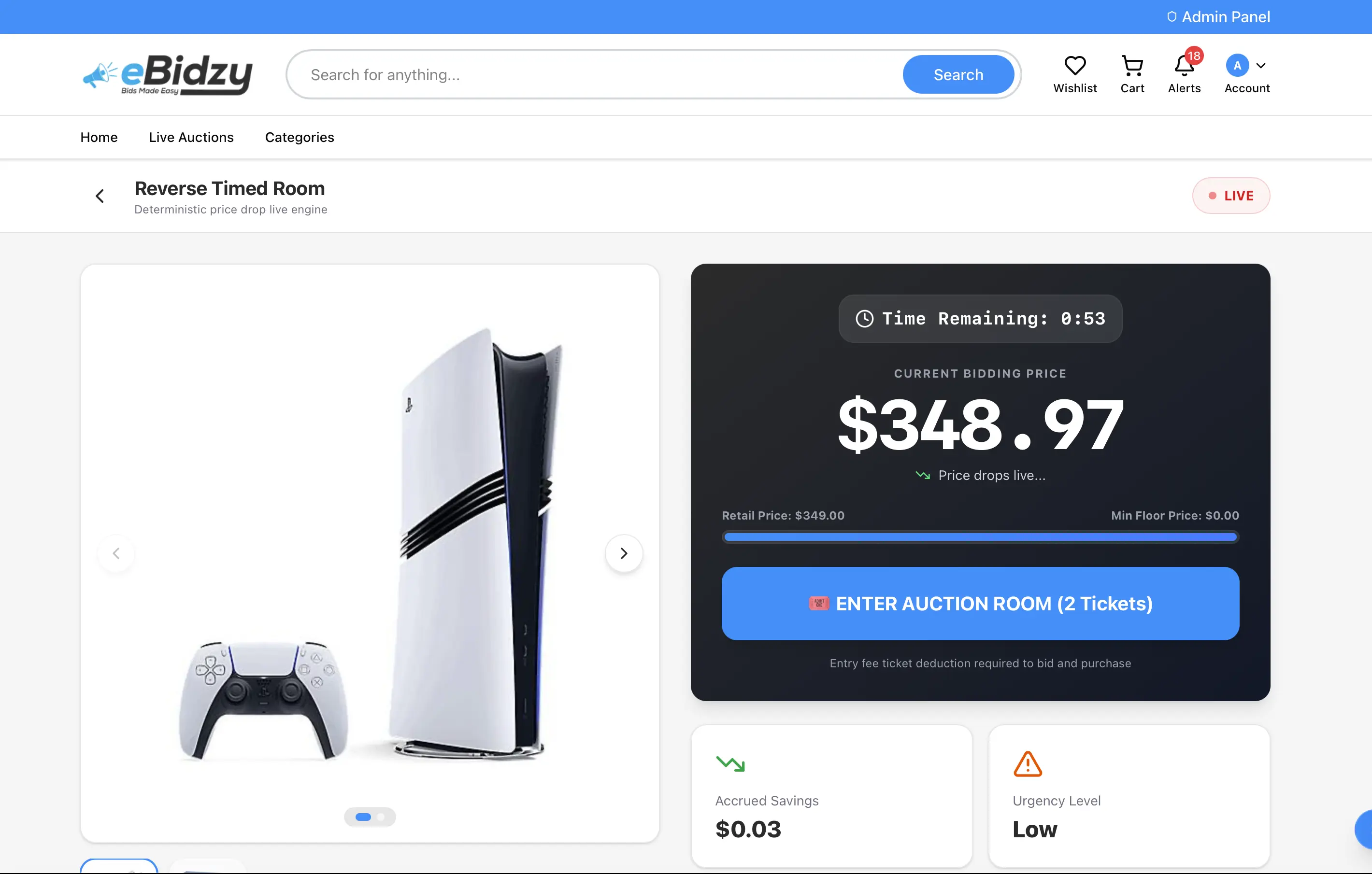
The Challenge
Resolving severe network clock drift in client-side countdowns and preventing race conditions and double-selling when thousands of users simultaneously trigger Buy Now clicks.
The Solution
Engineered an NTP-style latency handshake syncing all client clocks to absolute server time and formulated a 3-layer concurrency-safe ordering pipeline.
My Approach
State Isolation
Separated high-frequency bidding telemetry entirely into memory caches (Redis HASH) to shield primary database from excessive SQL write-locks.
NTP Clock Handshake
Constructed a WebSocket-based handshake estimating ping latency and adjusting client device timers to synchronize with server clock.
Results & Impact
Redis Redlock overhead during simultaneous Buy clicks
Zero deadlock transaction validation capacity
Technical Highlights
3-Layer Transaction Lock
Utilizing Redis Redlock to serialize, followed by PostgreSQL row-level locks for transaction write-back.
SELECT status, winner_id FROM auctions WHERE id = $1 FOR UPDATE;Lessons Learned
- In-memory caches are critical for real-time states
- NTP handshakes are required for timing equity
Next Steps
- Integrate localized multi-currency payout wallets via Stripe Connect
- Deploy real-time auction analytical heatmaps
Have a Similar Challenge?
I specialize in building production-grade systems that solve complex operational problems. Let's discuss how I can help architect your solution.